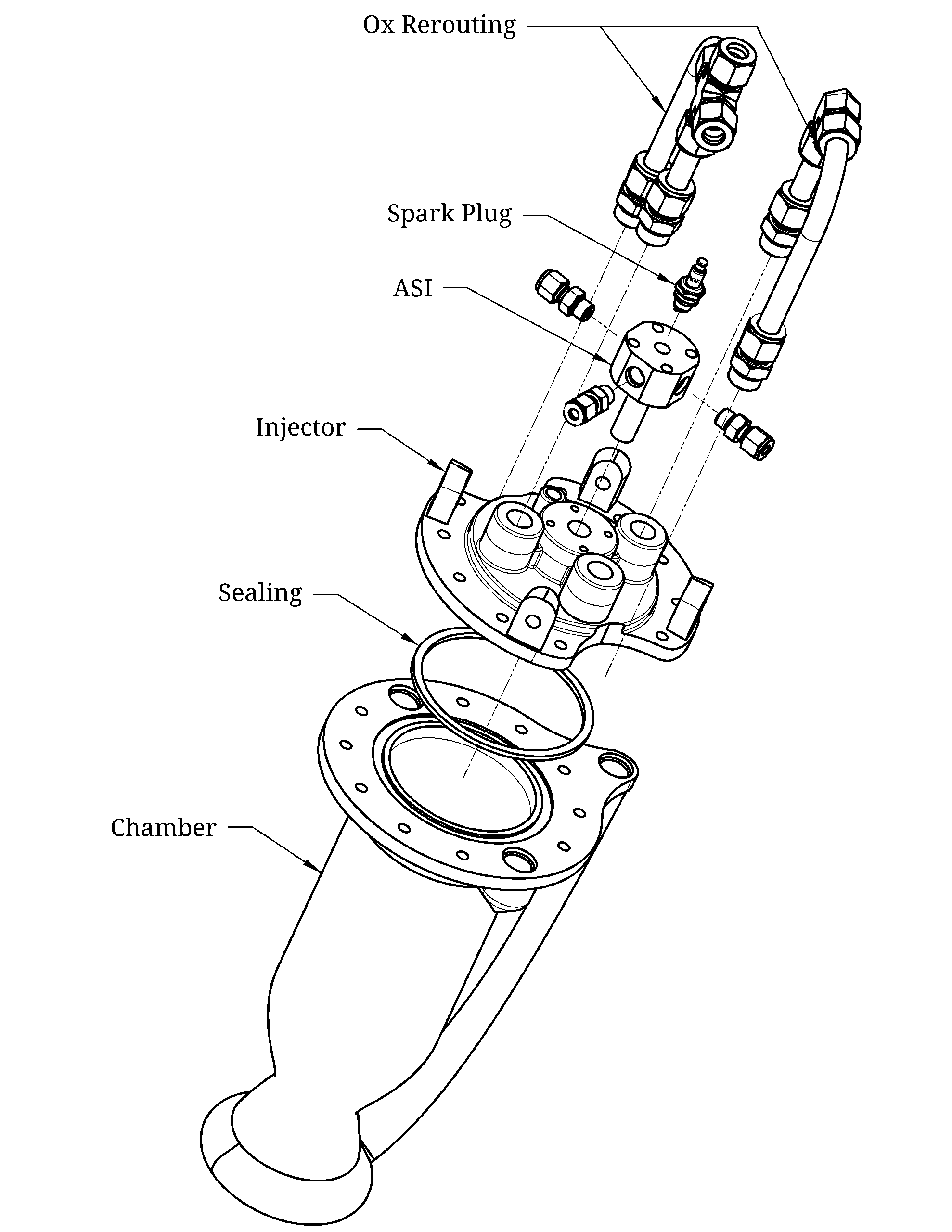
Yale Project Liquid is Yale University’s liquid propellant rocketry team. Established in 2022, they have been designing and testing their first ready-to-fire engine for the past 3 years, calling it Veritas. This regenerative cooled engine will be installed in the first rocket Project Liquid has designed to reach an expected altitude of 10,000 ft. To attain this, Veritas has a nominal thrust of 1,000 lbf at an O/F ratio of 5 using nitrous oxide and ethane as the propellants.
Injector Design
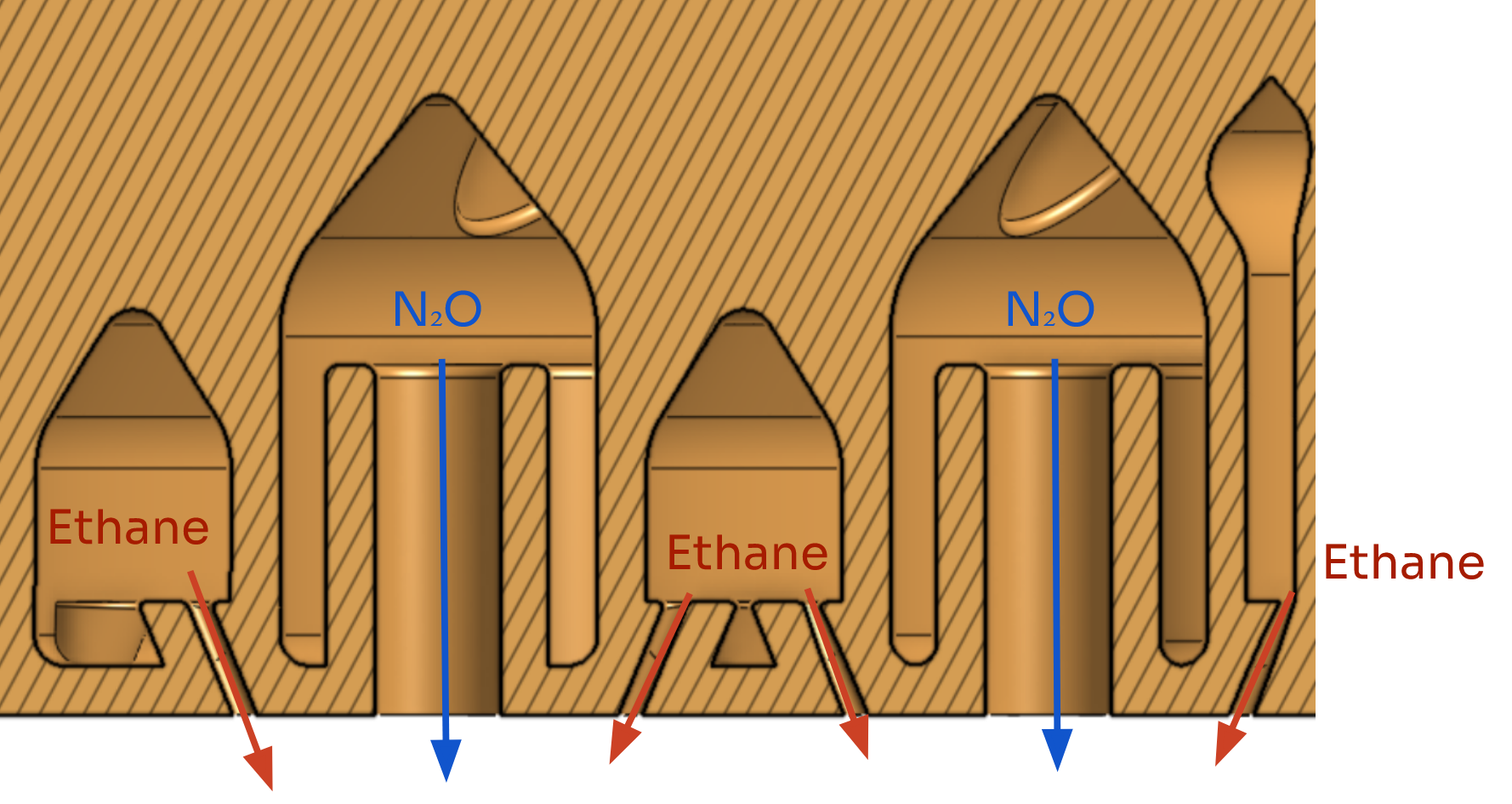
During my sophomore year, I led a team of 2 to spearhead the design for the Veritas’ injector. The injector delivers the correct ratio of propellants to the combustion chamber which then must be thoroughly atomized and mixed after it exits to achieve proper combustion.
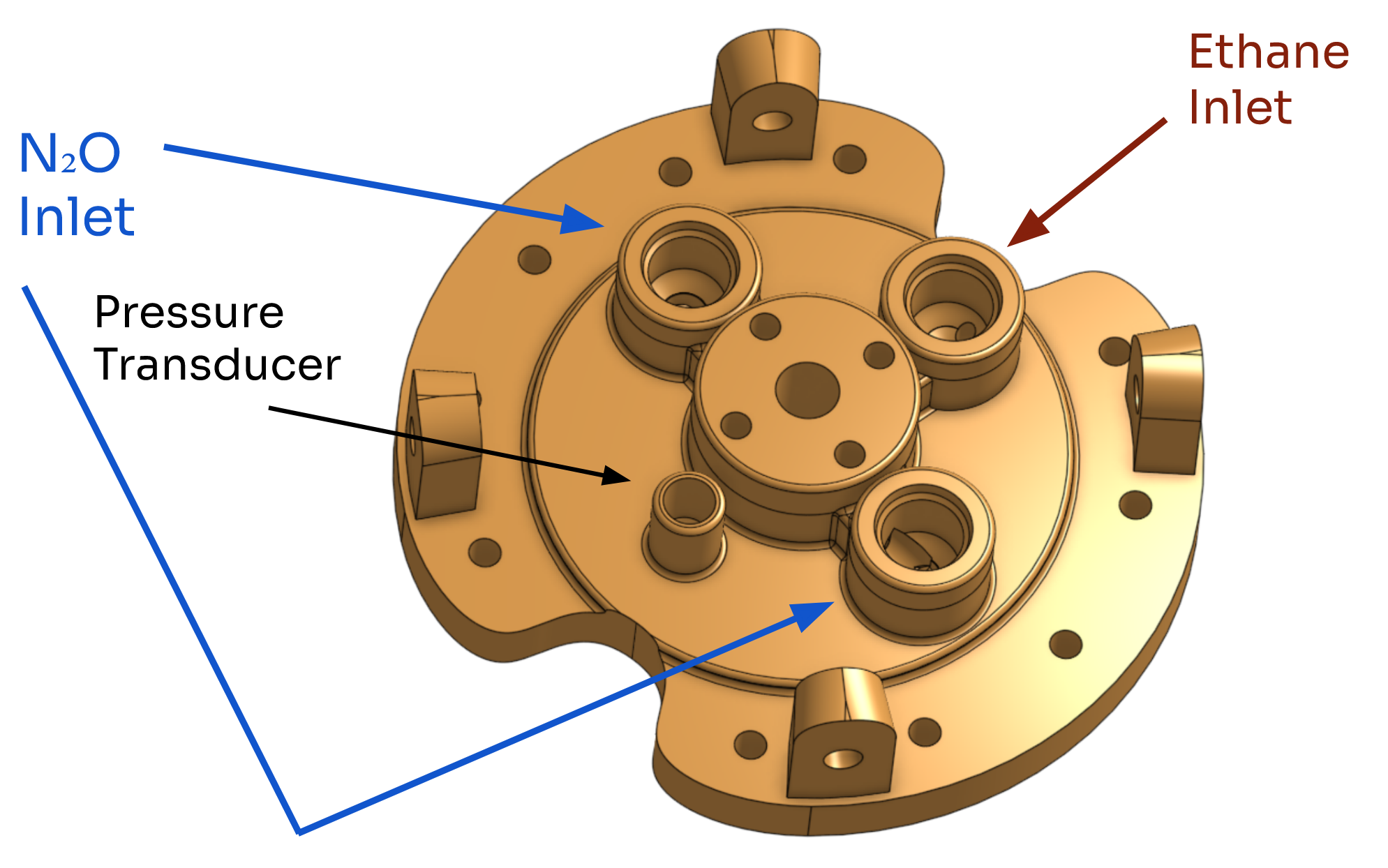
Parameters:
- O/F Ratio: 5
- Total Mass Flow: 1.97 kg/s
- Inlets: 2 N2O & 1 Ethane
- Must integrate with igniter
- Must comply with Selective Laser
Melting (SLM) 3D printing constraints
Design:
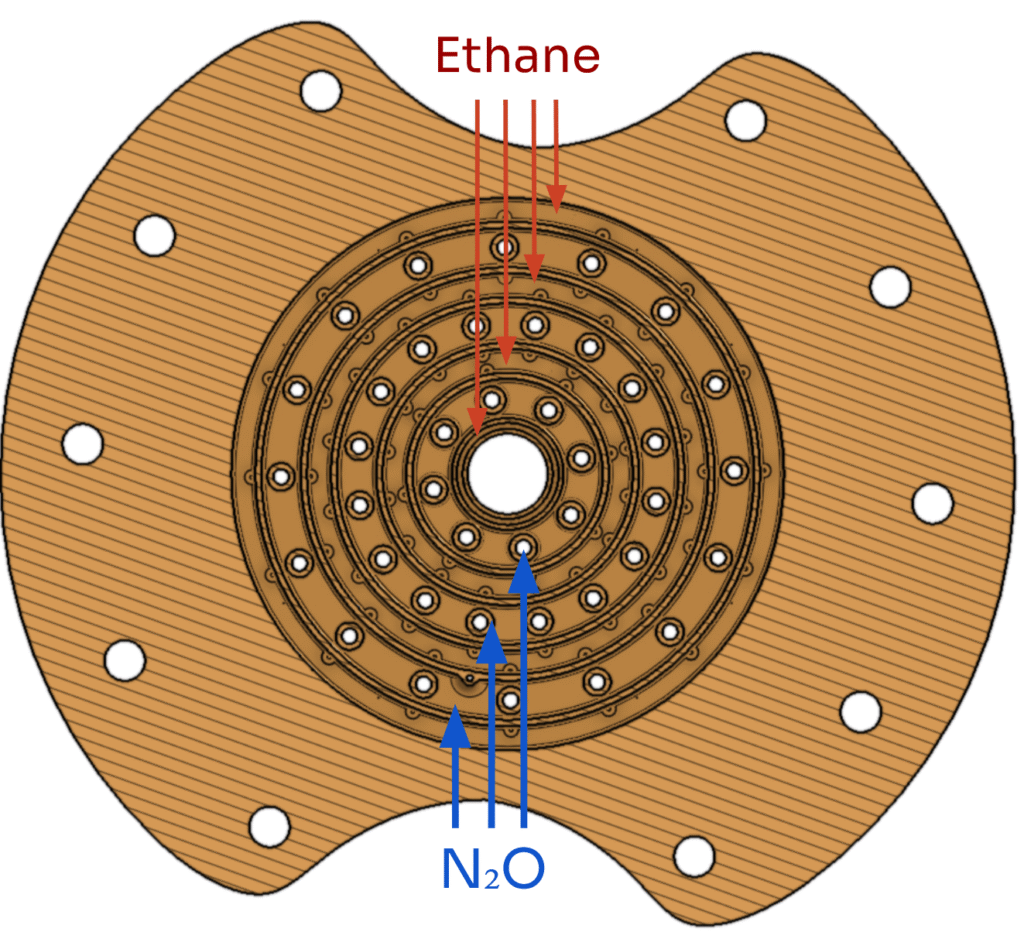
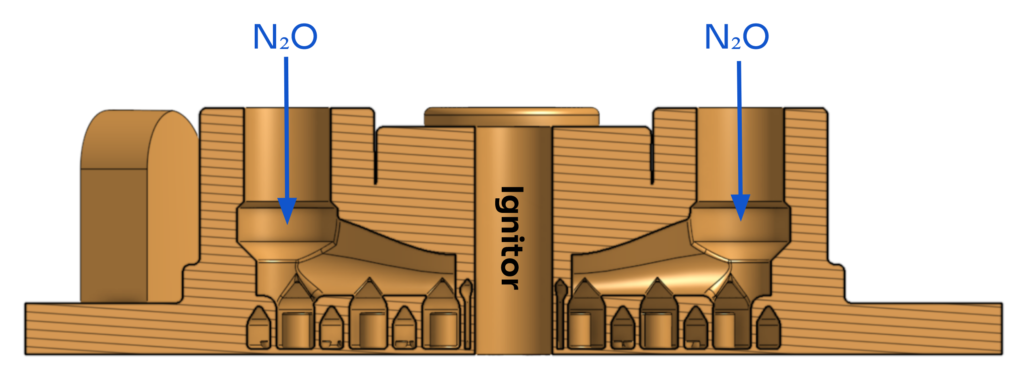
Using OnShape, I developed parametric models of initial concepts to enable easy adjustments as the team acquired new information. Drawing inspiration from NASA’s Liquid Rocket Engine Injectors (SP-8089), I incorporated design principles for downcomers, internal rerouting, and orifices. As new constraints arose during the feed system and chamber development, I promptly adapted the designs. I presented my work to technical advisors, who approved the design. Recently, the injector underwent water-flow testing to verify predictable pressure drops through it.
Project Lead
In my junior year, I co-led the propulsion team for Project Liquid, overseeing the finalization of the engine. Utilizing Jira and Confluence, I effectively updated timelines, delegated tasks, and managed several mission-critical assignments while mentoring new members on the technical fundamentals of the system. By the end of the year, the engine was about 90% complete, testing procedure documentation had commenced, and the new members were thoroughly familiar with the system.